

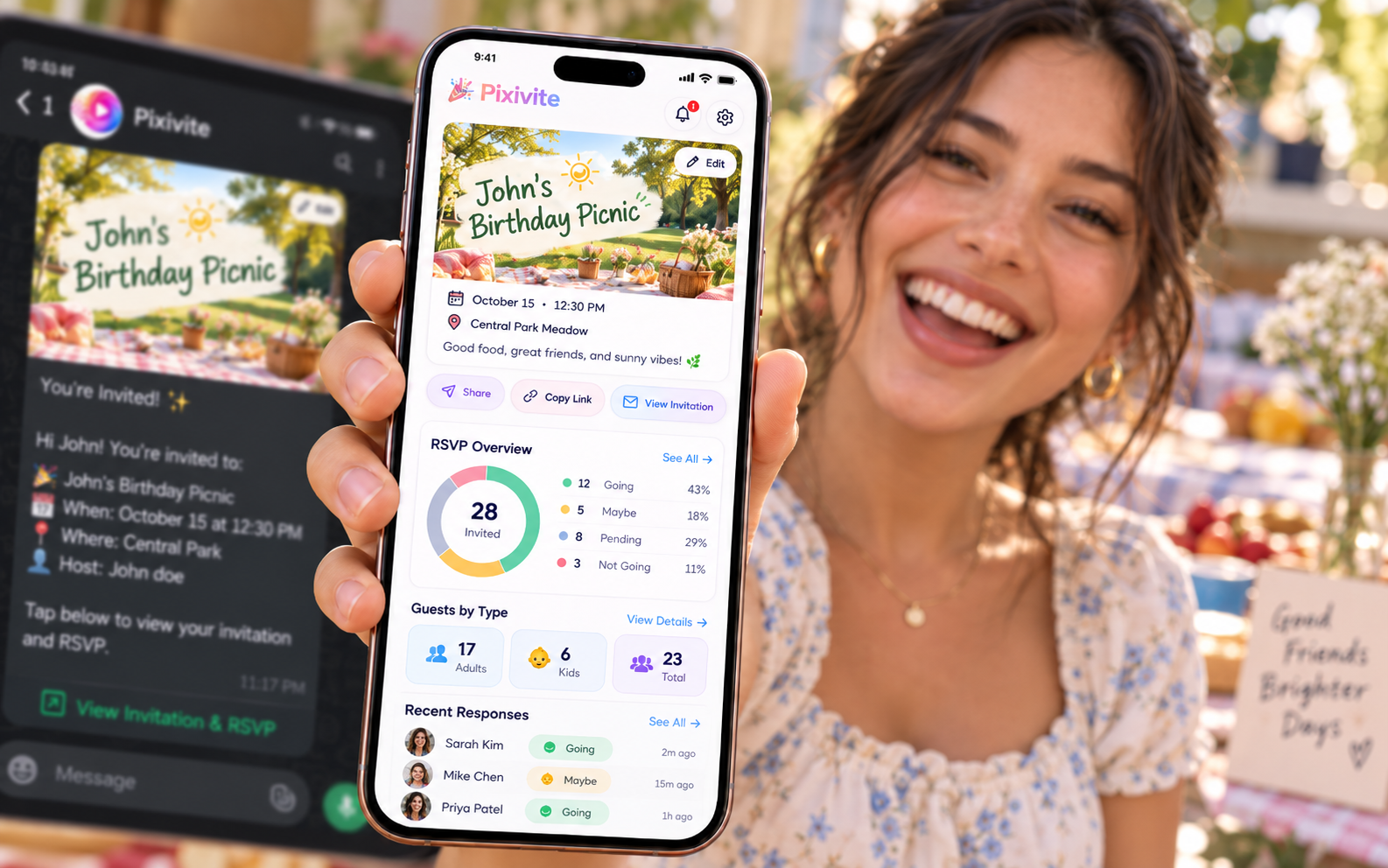
The invitation goes into a group chat. A few people react with hearts. Someone replies, “We should be there.” Another person says they need to check. A relative answers for three other family members. By the end of the day, the message looks active—but the host still does not know who is coming.
This is the quiet problem with planning events through chat. WhatsApp, SMS, and email are excellent ways to reach people. They are less useful as the place where the guest list itself has to live.
A reaction is not an RSVP. A message saying “sounds great” is not a headcount. And an answer buried between jokes, photos, and unrelated conversation is easy to lose.
The better approach is not to abandon the channels people already use. It is to give every message one clear destination: a digital invitation where the details stay current and every guest can respond directly.
Group chats were built for conversation, not coordination
A chat works beautifully when people are deciding where to meet or sharing excitement before a celebration. It becomes fragile when the host depends on it as the official record.
Important details move upward as new messages arrive. Guests respond in different ways. One person may count a thumbs-up as a yes while another uses it only to acknowledge the message. Plus-ones and children are often left unclear. If the venue, time, or parking instructions change, the host has to hope everyone notices the correction.
The result is familiar: a guest list in one place, responses in another, private messages arriving on the side, and a host repeatedly asking, “Can you confirm if you are coming?”
Modern invitations should solve more than the design problem. They should create a dependable connection between the host, the event, and the people invited.
Send the invitation where guests already are
People should not have to adopt a new communication habit just to receive an invitation. A host may know that one side of the family responds fastest on WhatsApp, a group of friends prefers SMS, and other guests expect email.

Pixivite supports invitation delivery through eligible WhatsApp, SMS, and email channels, so the host can choose the channel that fits the guest. Availability depends on the plan, region, messaging configuration, and consent requirements, but the underlying idea is simple: meet people where they already communicate.
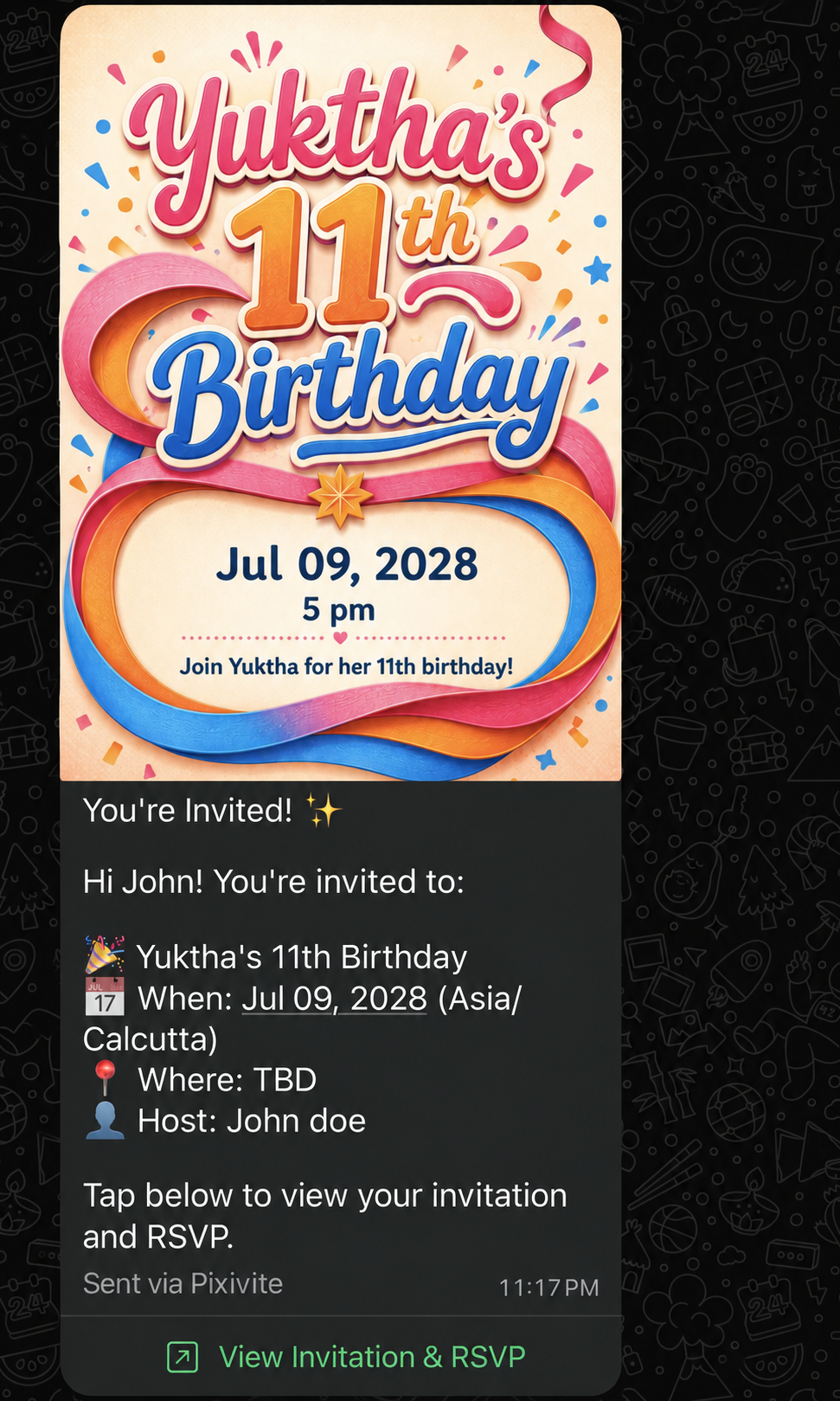
WhatsApp can do more than carry a plain link. A Pixivite invitation can arrive with the invitation image and useful event context such as the event title, date, time, venue, and a direct RSVP path. If the event includes a video invitation, the message can lead guests to that experience as well. The message feels at home in WhatsApp, but it is still a real invitation—not another loose detail in a long conversation. Guests can open it, see the event as the host intended, and respond from the same clear destination.
Give guests one place to answer
A useful digital invitation should remove uncertainty. Guests should be able to understand the event and make a decision without searching through earlier messages.
- At minimum, keep these details together
- the event and who is hosting it
- the date, time, venue, and full address
- the theme, dress code, or arrival instructions when they affect the guest
- whether plus-ones or children are included
- a clear RSVP choice and response deadline
- any essential parking, accessibility, food, or schedule information
With Pixivite, a guest can respond as accepted, maybe, or declined. The response can also include the party size and relevant notes when those details are requested. That gives the host something a chat reaction cannot provide: a structured answer connected to the right guest and event.
It also makes changing an answer easier to understand. Plans change. A guest who first said maybe may later accept, or someone who accepted may need to decline. The response belongs to the invitation, so the guest list can reflect the latest update rather than leaving the host to reconcile two contradictory messages.
Let the host know when the guest list changes
Collecting structured RSVPs is only useful if the host can stay informed.
When a guest responds through Pixivite, the host can receive an RSVP alert through configured channels. Depending on the available setup, that may include WhatsApp, SMS, email, an in-app notification, or a mobile push notification. The alert can identify the guest, show whether they accepted, declined, or selected maybe, and include useful headcount context.
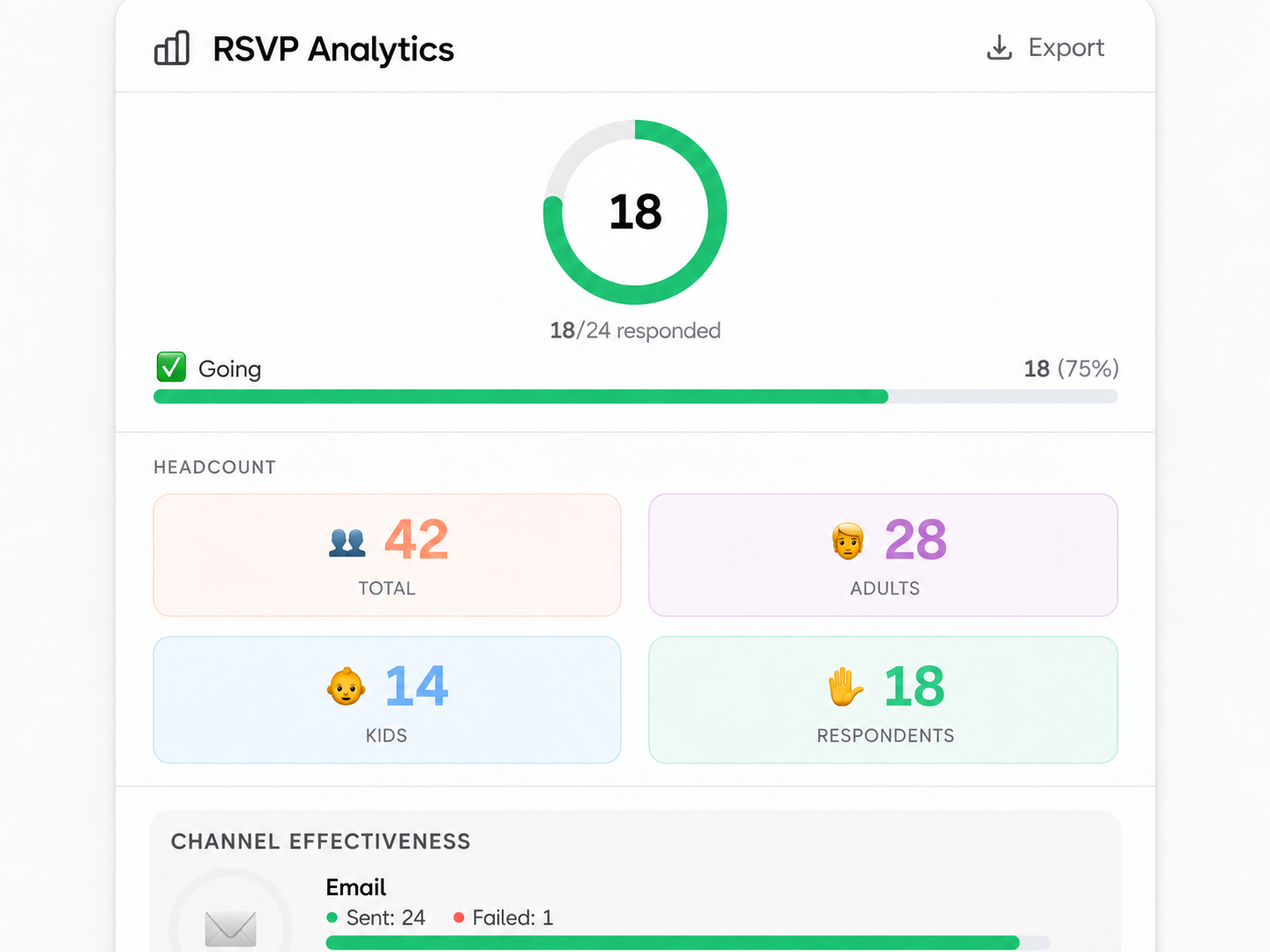
For WhatsApp alerts, Pixivite can also summarize the current response picture: accepted, maybe, declined, and still pending. That means the host does not have to keep reopening a dashboard simply to discover that something changed. The update comes to them; the full guest view remains available when they want to review the details.
This changes the rhythm of hosting. Instead of checking repeatedly and maintaining a separate list, the host can see responses arrive naturally and step into the guest dashboard only when there is something to manage.
Send one update without restarting the group chat
Invitations are rarely the final message before an event. The parking entrance changes. Dinner moves indoors. Guests need a reminder about the dress code. The host wants everyone to know that the celebration will begin thirty minutes earlier.
Sending these updates one person at a time creates the same problem the invitation was meant to solve. Posting them in a busy group chat can leave the host wondering who actually saw the message.
Eligible Pixivite events support guest broadcasts. A host can write one update and send it to all invited guests or to a relevant group, such as accepted, maybe, pending, or selected guests. Pixivite uses the guest's invitation channel where it is available, so an email guest can continue by email while a WhatsApp guest receives the update through WhatsApp. The invitation link can travel with the update, giving everyone a direct route back to the current event details.
Broadcasts are subject to plan, channel, consent, and notification limits. Their value is not unlimited messaging. It is controlled, event-specific communication: one useful update, sent to the people who need it, through a channel already connected to their invitation.
The invitation can become the center of the event
Most digital invitations still behave like prettier versions of paper. They announce the event, then leave the host to manage everything else through messages, notes, and memory.
The more useful future is connected. The invitation carries the visual identity of the celebration. WhatsApp, SMS, or email carries it to the guest. The guest responds through a clear RSVP path. The host receives the change without constantly checking. When plans move, one event update reaches the right people.
That is the larger idea behind Pixivite. It is not only a place to make an invitation image. It brings the invitation, delivery, responses, guest communication, and eligible video experiences into one event flow.
The group chat can remain what it does best: a place for excitement, questions, and conversation. Pixivite can take care of the part that needs to stay clear.
Create a personal invitation, send it where your guests already are, and keep every response connected with Pixivite.