

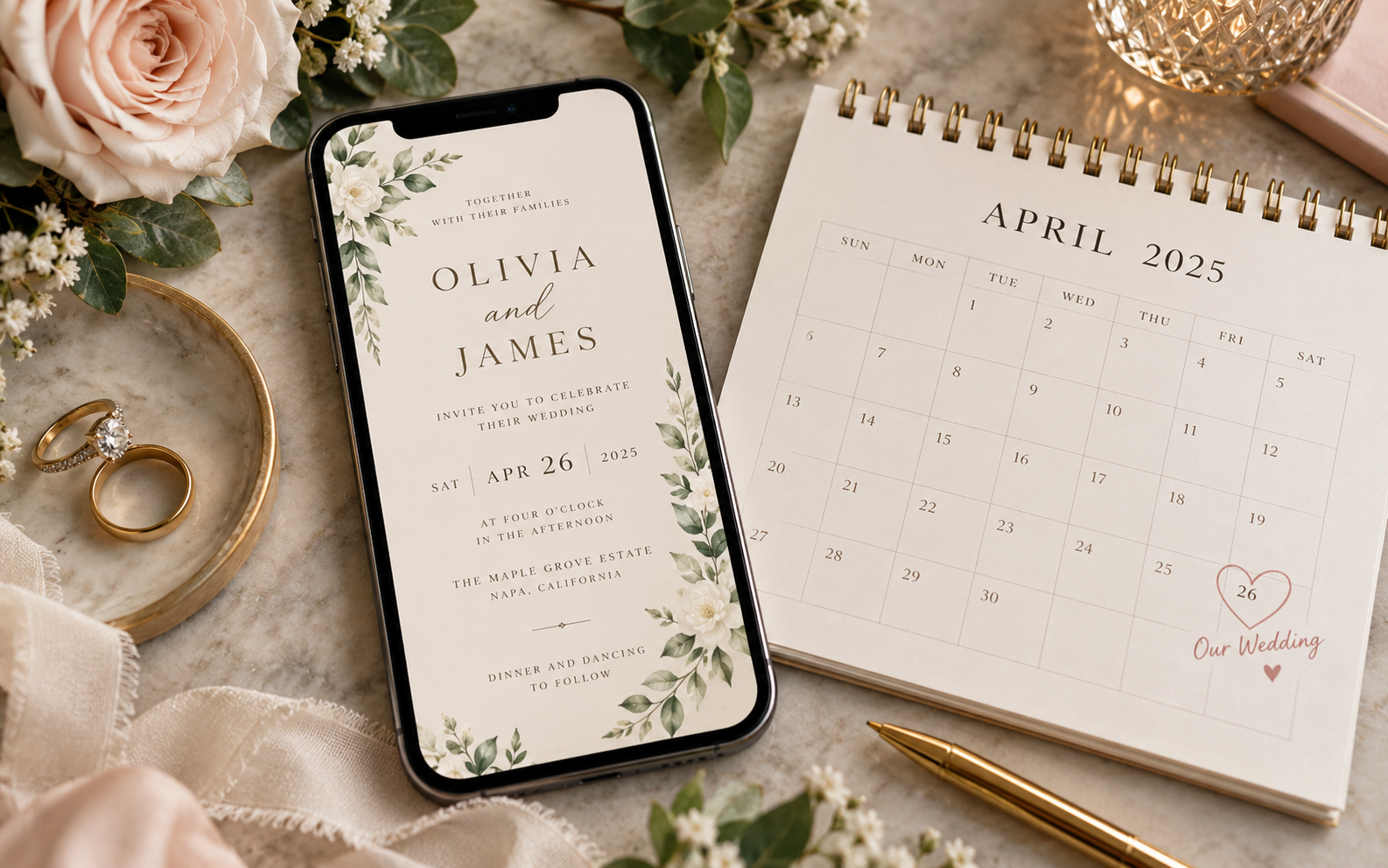
For most weddings, send save-the-dates about six to eight months before the celebration, then send invitations around six to eight weeks before. If guests will travel a long distance, or you’re hosting a destination wedding or a holiday-weekend celebration, give them more notice: save-the-dates roughly eight to twelve months ahead and invitations about ten to twelve weeks ahead can help guests plan.
These are useful starting points, not rules. Your venue, travel needs, guest list, and the amount of notice you’ve already given all matter. The goal is simple: tell guests early enough to make plans, then send the full details when they’re ready to respond.
A wedding invitation timeline at a glance
- Six to eight months before: Send save-the-dates for a local wedding. For destination weddings or celebrations with substantial travel, aim for about eight to twelve months ahead. Include the date, city or region, and a wedding website or travel note if available.
- Six to eight weeks before: Send invitations for a local wedding. For destination celebrations, about ten to twelve weeks can give guests more time to arrange travel. Include the complete ceremony and reception details, location, dress code, RSVP instructions, and response deadline.
- Three to four weeks before: Set the RSVP deadline as a starting point, then adjust it to your caterer or venue’s final-headcount deadline.
- A few days after the deadline: Send a friendly reminder to guests who have not responded.
Build backward from the date your caterer or venue needs a final headcount. That deadline—not a generic calendar—is what determines when your RSVP date should fall.
Let the invitation carry the feeling and the details
A save-the-date can be simple. When you send the full invitation, make the practical information easy to scan and keep its visual style connected to the celebration.
When should you send save-the-dates?
Send a save-the-date once your wedding date and location are settled and you’re ready to tell guests to keep the date open. You don’t need every schedule detail finalized. Guests mainly need the date and a general location, especially if they’ll need to book travel or time away from work.
Save-the-dates are most useful when guests have to make plans early. Consider sending them toward the earlier end of the range if:
- You’re hosting a destination wedding or many guests will travel.
- Your date falls on a holiday weekend or during a busy travel season.
- Guests need to arrange childcare, time off, or international travel.
- You’re inviting people from different cities or countries.
If most guests live nearby and the date is not tied to a major travel period, you may not need the longest possible lead time. Avoid sending a save-the-date before the date and location are dependable; a change after guests have booked travel is difficult for everyone.
Only send save-the-dates to people you intend to invite to the wedding. They signal that a formal invitation will follow, so use a guest list you feel comfortable standing behind.
When should wedding invitations go out?
For a local wedding, six to eight weeks before the event is a practical window for the full invitation. For destination weddings or celebrations with substantial guest travel, aim for around ten to twelve weeks, while sending save-the-dates much earlier.
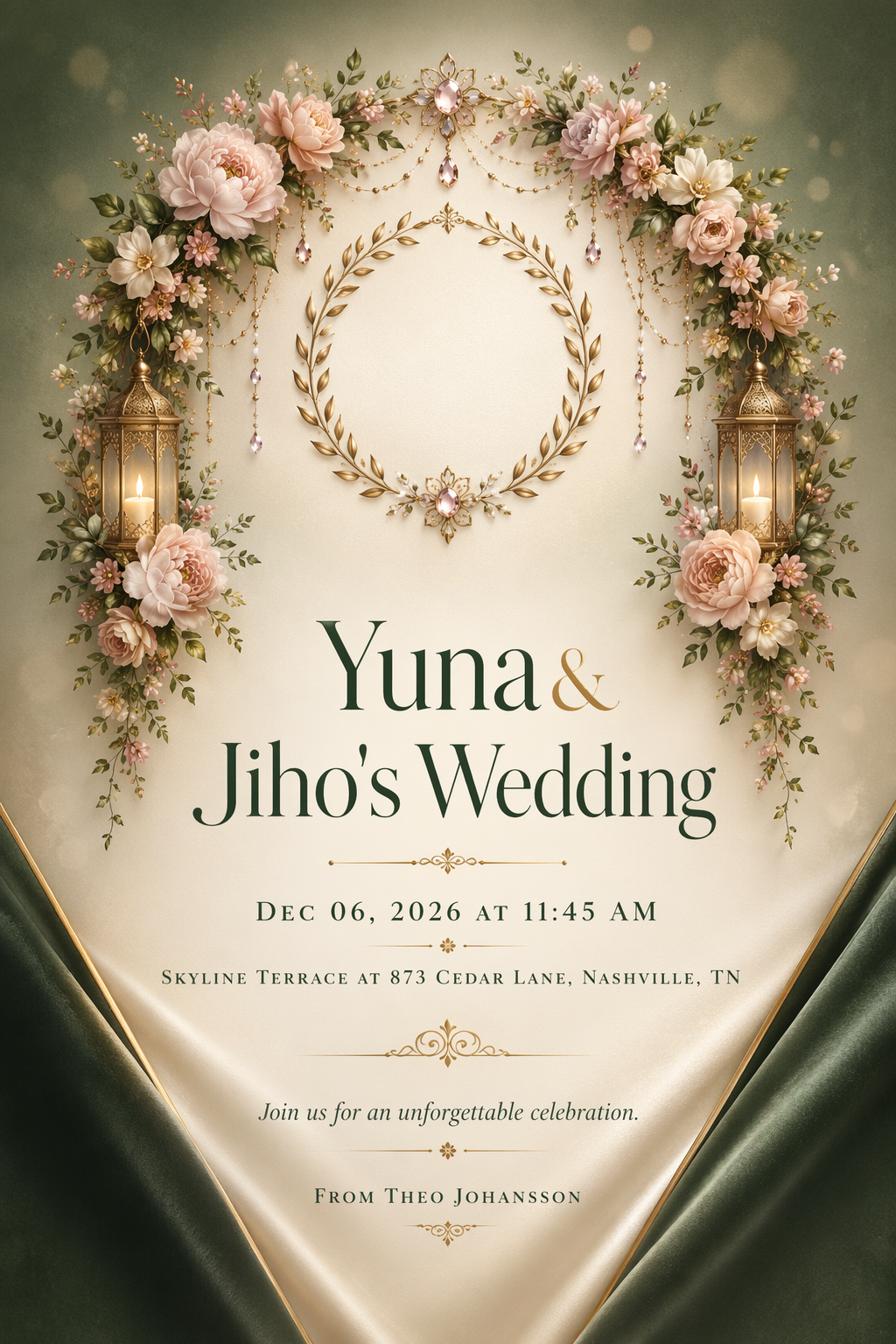
Your invitation should arrive after the essential details are settled. Include:
- Who is hosting or celebrating, and the names of the couple.
- The ceremony date and start time.
- The venue name and full address.
- Reception details, if they differ from the ceremony.
- Dress code or other preparation guests need to know.
- A clear RSVP method and deadline.
- A wedding website or travel information, if you have one and it contains useful details.
If plans are still changing, it is usually better to wait until the information is reliable than to send an invitation that needs immediate correction. If you’re working with a planner, venue, or caterer, check their production and headcount deadlines before choosing the send date.
How to choose an RSVP deadline
Start with the date your venue, caterer, or planner needs the final guest count. Then work backward to leave time to follow up with guests who have not responded and resolve any meal or seating questions. For many weddings, an RSVP deadline about three to four weeks before the event provides a workable buffer, but supplier deadlines can make that window shorter or longer.
Make the deadline specific and visible. “Please reply by September 8” is easier to act on than “RSVP soon.” Give guests one clear response method and explain whether they should reply for each invited person in their household.
For more help making response requests clear and keeping replies organized, read How to Collect RSVPs Without Chasing Guests in Group Chats.
What if you’re sending invitations late?
If the wedding is approaching and invitations haven’t gone out, send them as soon as the key details are confirmed. A short, direct invitation is more helpful than delaying for perfect wording or a finished wedding website.
Contact guests who need to travel personally when possible. Be clear about the date, location, RSVP deadline, and any booking information that is ready. Avoid assuming that a late invitation means a guest can attend; give people room to decline gracefully if they already have plans.
For a very small wedding or a last-minute change in plans, a digital invitation can be a practical way to share event details. Choose a format that guests can open easily, and make sure the response instructions are clear.
A simple way to keep the timeline manageable
Set three dates on your planning calendar: when save-the-dates go out, when invitations go out, and when RSVPs are due. Add the venue’s final-headcount deadline, then check that the RSVP date leaves enough time for follow-up.
The invitation does not have to solve every part of wedding planning. It should give guests the information they need at the moment they need it—and make the next step obvious. With a little notice and a clear response date, guests can plan with confidence and you can make decisions with a more dependable headcount.
Create a wedding invitation that gives your guests the details and feeling of your celebration in one place.